
Table of Contents
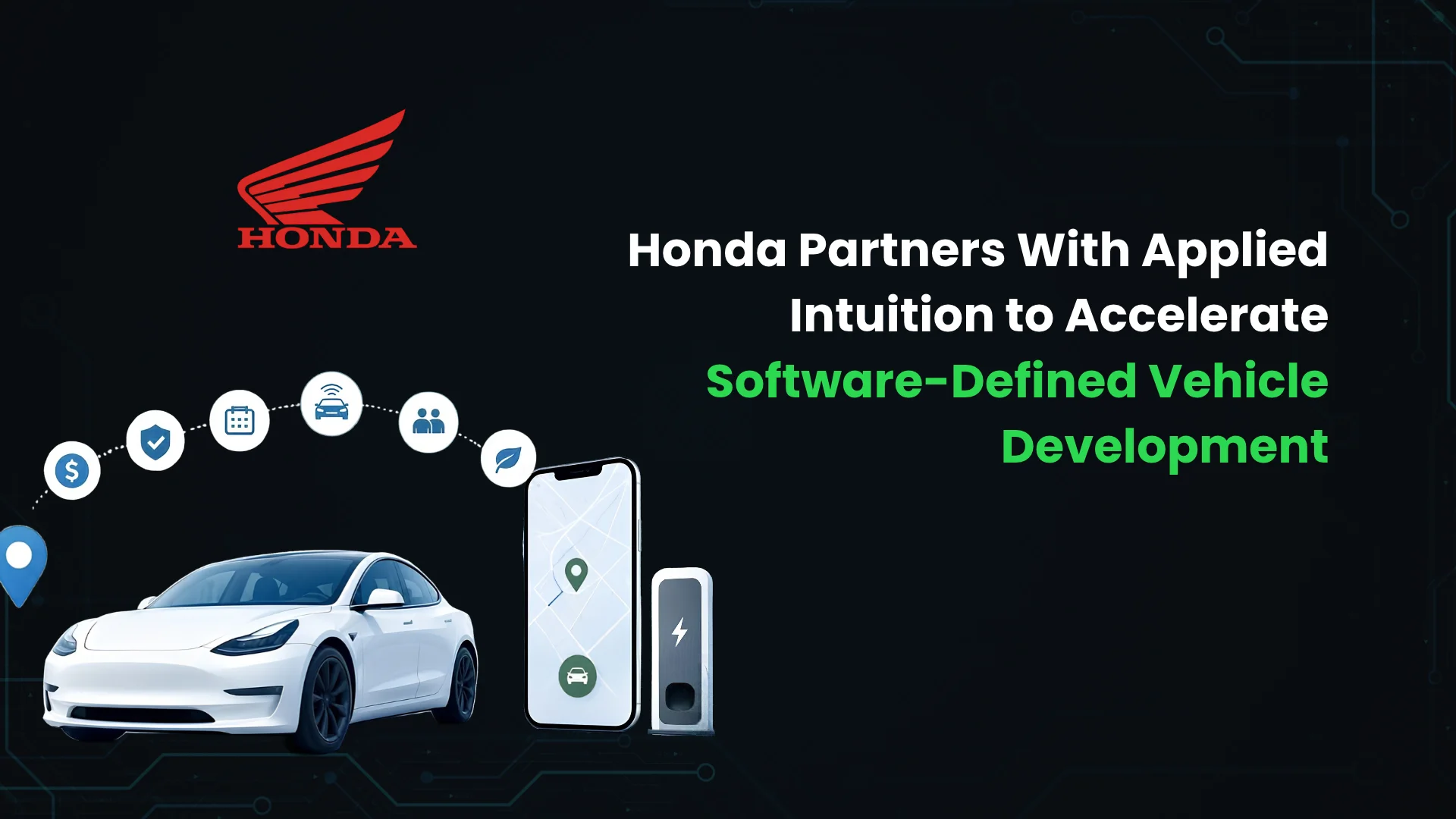
Honda Motor Co. has partnered with automotive software company Applied Intuition to accelerate the development of its next-generation software-defined vehicles (SDVs). Announced on October 6, 2026, the collaboration aims to help Honda build a centralized, upgradeable vehicle software platform that can support evolving customer expectations and future vehicle technologies.
The partnership combines Honda’s automotive engineering expertise with Applied Intuition’s vehicle software and AI capabilities, bringing together engineering teams in Japan and Silicon Valley.
Building a Unified Software Platform
At the center of the collaboration is Applied Intuition’s Vehicle OS software, which will support Honda’s development of a consolidated software-defined vehicle platform. The platform is intended to create a common software foundation across different vehicle architectures and powertrains, including electric, hybrid and internal combustion vehicles.
By reducing fragmentation between software systems and development workflows, Honda aims to improve software reuse, shorten development timelines and make it easier to introduce new vehicle features over time.
A unified architecture could also help Honda streamline development across vehicle models while maintaining the engineering standards required for safety, reliability and production at scale.
Why Software-Defined Vehicles Matter
Software-defined vehicles are changing how automakers design, develop and maintain vehicles. Instead of relying primarily on fixed hardware configurations, SDVs use software platforms that can enable new functions, improve existing capabilities and support updates throughout a vehicle’s lifecycle.
This approach is becoming increasingly important as drivers expect more personalized digital experiences, connected features and continuous improvements after purchase.
For automakers, however, developing these systems requires coordination across vehicle electronics, operating systems, applications, cloud services and engineering teams. A more consistent software foundation can help reduce complexity and make future development more efficient.
Faster Development Without Losing Engineering Control
Honda intends to accelerate its internal software development while retaining control over its vehicle architecture and software direction. The partnership is designed to support that objective by combining Honda’s established vehicle development processes with Applied Intuition’s software platform and development expertise.
The collaboration also reflects a broader industry challenge: traditional automakers must adapt to faster software development cycles while preserving the quality, safety and reliability expected of their vehicles.
For Honda, improving development speed could help its teams respond more effectively to changing technologies and customer requirements. The potential benefits will depend on how successfully the platform is integrated into production programs and existing engineering workflows.
What This Means for the Automotive Industry
The Honda–Applied Intuition partnership highlights a growing shift in automotive competition. Vehicle performance and mechanical engineering remain important, but software architecture, update capabilities and digital experiences are becoming increasingly influential in how vehicles are developed and differentiated.
A common platform that spans multiple powertrains could offer several advantages:
- Greater software reuse: Engineering teams may be able to reuse software components across different vehicle programs.
- More flexible upgrades: A centralized architecture can make it easier to develop and introduce software improvements.
- Improved development efficiency: Unified workflows may reduce duplication and complexity across teams.
- More personalized experiences: A flexible software foundation can support vehicle features tailored to customer needs.
- Support for multiple powertrains: A shared architecture can help coordinate development across electric, hybrid and conventional vehicles.
These benefits are objectives of the collaboration rather than confirmed production outcomes, and their impact will become clearer as the platform advances.
A Long-Term Investment in Software-Defined Mobility
The partnership builds on an existing relationship between Honda and Applied Intuition that began in 2019, when Honda became Applied Intuition’s first original equipment manufacturer customer in Japan.
The expanded collaboration signals Honda’s intention to strengthen its software development capabilities as the automotive industry moves toward more connected, upgradeable and software-centric vehicles.
As automakers work to bring software-defined vehicles to market at scale, the ability to combine software innovation with proven automotive engineering will be critical. Honda’s collaboration with Applied Intuition represents another step in that transition, with a focus on development speed, platform consistency and long-term vehicle evolution.