

Table of Contents
The Automobile Is Becoming a Connected Digital Platform
For decades, automotive innovation was largely measured through engine performance, fuel efficiency, safety features, and mechanical engineering. These capabilities remain important, but software and connectivity are increasingly shaping how vehicles operate, improve, and interact with drivers.
Modern vehicles can collect data from onboard sensors, communicate with external systems, receive software updates, and support digital services throughout their operational life. As a result, the vehicle is no longer simply a product delivered at the point of sale. It is becoming a connected platform that can evolve after it reaches the customer.
This transformation is creating opportunities for automakers, technology providers, telecom operators, software developers, and fleet managers. It is also changing customer expectations around navigation, safety, personalization, maintenance, and in-car experiences.
The connected vehicle economy is therefore about more than internet access inside a car. It involves building an ecosystem in which vehicle software, cloud infrastructure, data, and digital services work together to improve the ownership experience and create sustainable business value.
1. Software-Defined Vehicles Are Changing Automotive Development
Software-defined vehicles (SDVs) use software-controlled functions and increasingly centralized or zonal electronic architectures to manage capabilities that were traditionally implemented through separate hardware components and embedded control systems.
This approach allows automakers to develop and improve selected vehicle functions through software rather than requiring a physical redesign for every change.
Key capabilities include:
- Centralized computing: Consolidating selected functions onto more powerful computing platforms instead of relying exclusively on numerous isolated electronic control units.
- Over-the-air updates: Delivering software improvements remotely, reducing the need for workshop visits for supported updates.
- Feature configuration: Enabling certain vehicle capabilities to be configured or activated through software, depending on hardware availability and commercial terms.
- Continuous development: Allowing manufacturers to improve supported features after delivery and manage software releases throughout the vehicle lifecycle.
The shift also changes how automotive companies organize engineering teams. Hardware, embedded software, cloud services, cybersecurity, and user experience must increasingly be designed as connected parts of the same product.
However, software-defined architecture does not mean that every vehicle function can be updated remotely. Hardware limitations, safety requirements, regulatory approvals, and vehicle architecture determine which capabilities can change after production.
2. Connectivity Is Creating a Continuous Flow of Vehicle Data
Connected vehicles use technologies such as cellular networks, Wi-Fi, Bluetooth, satellite positioning, and vehicle-to-everything communication to exchange information with external systems.
Depending on the vehicle and service, this connectivity can support navigation, traffic information, emergency assistance, remote diagnostics, fleet tracking, and selected vehicle controls through mobile applications.
The business opportunity comes from using this information to improve decisions across the vehicle lifecycle.
For individual drivers, connected services may provide more relevant route guidance, maintenance reminders, and remote access to supported functions. For fleet operators, connectivity can provide visibility into vehicle location, fuel or energy consumption, utilization, and operating conditions.
Automotive manufacturers can also use aggregated and appropriately governed data to identify recurring technical issues, improve service planning, and understand how vehicles perform in real-world conditions.
The challenge is managing the volume and variety of information generated by connected vehicles. Data must be reliable, securely transmitted, appropriately processed, and made available to systems that can use it effectively.
Connectivity creates the foundation, but the real value emerges when vehicle data supports a useful action.
3. Over-the-Air Updates Are Extending the Vehicle Lifecycle
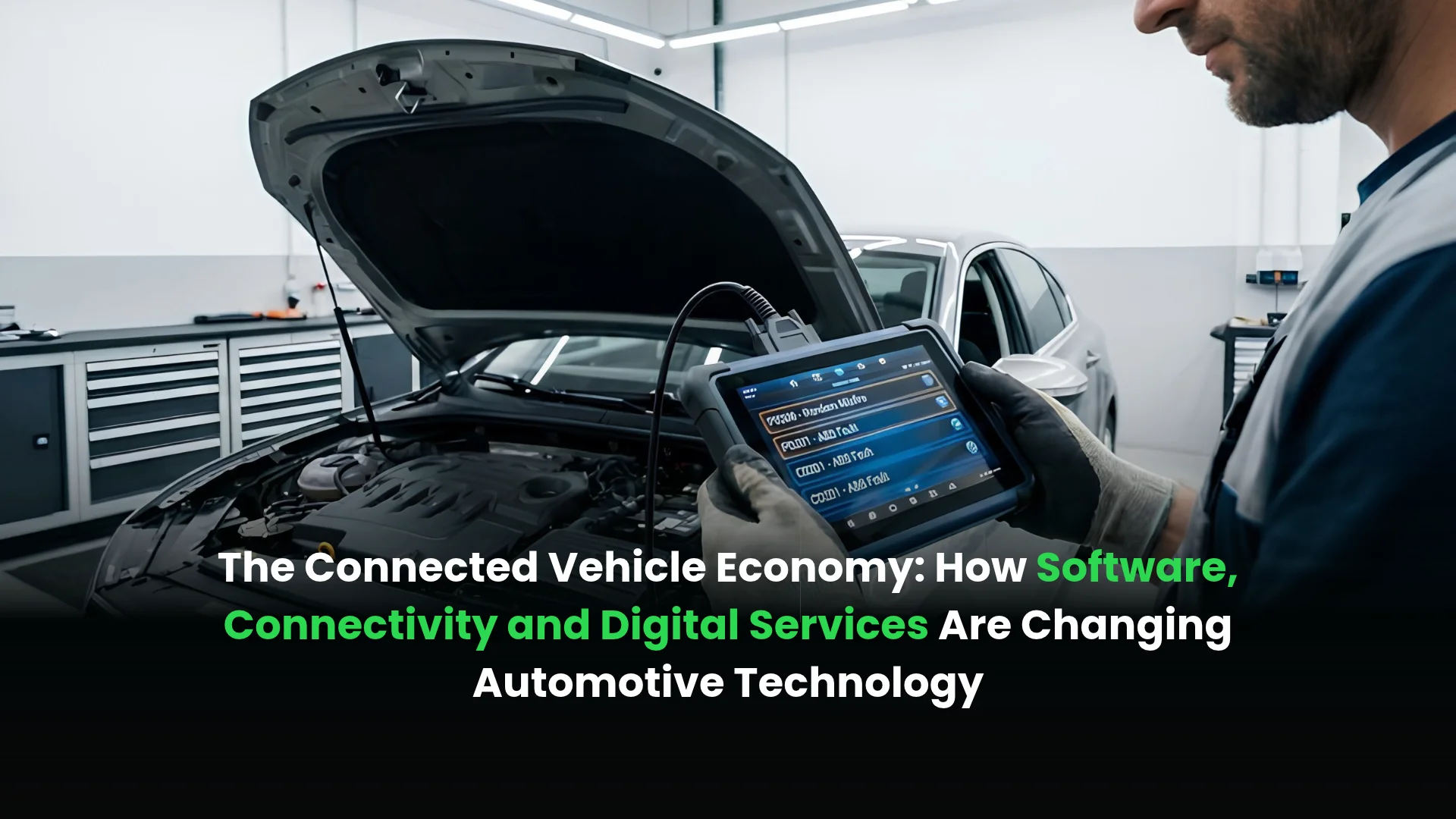
Traditionally, improving vehicle software could require a dealership visit, a diagnostic connection, and a technician to install the update. Over-the-air (OTA) technology allows supported software changes to be delivered remotely, offering a more flexible approach to vehicle maintenance and feature improvement.
OTA updates can address certain software defects, improve infotainment performance, update navigation data, and enhance eligible vehicle functions. For manufacturers, they can reduce some service-related friction and provide a more direct channel for maintaining software after delivery.
For example, a manufacturer could distribute an update to improve the performance of a connected navigation service without requiring every affected customer to visit a service center.
However, OTA capability introduces new operational responsibilities. Manufacturers need secure update delivery, software version management, compatibility checks, recovery mechanisms, and safeguards against interrupted or failed installations.
Updates affecting safety-critical systems require particularly rigorous validation and regulatory compliance. A successful OTA strategy therefore depends on much more than pushing new code to vehicles. It requires a controlled process for developing, testing, deploying, and monitoring software across a diverse fleet.
4. Digital Services Are Creating New Automotive Business Models
Connected vehicles create opportunities for automakers to offer services beyond the initial vehicle sale. These may include navigation subscriptions, remote vehicle management, charging services, connected security features, fleet analytics, and eligible driver-assistance capabilities.
This model can create recurring revenue opportunities, but it also changes the relationship between manufacturers and customers.
A digital service must provide clear, ongoing value to justify a subscription or additional fee. Customers may be reluctant to pay for features they expect to be included in the purchase price, particularly if the service offers limited benefits or depends on unreliable connectivity.
Automotive companies therefore need to understand which features customers value enough to use consistently and which are better included as standard equipment.
Potential service models include:
- Subscription services: Recurring access to eligible digital features or connected services.
- Usage-based services: Charges based on defined usage or service consumption.
- Fleet platforms: Software for monitoring vehicles, optimizing routes, and managing operational performance.
- Charging ecosystems: Integrated services that help electric vehicle drivers locate charging points, manage charging sessions, and monitor energy use.
- Lifecycle services: Digital support for maintenance, diagnostics, and vehicle ownership.
The strongest business models will balance commercial opportunities with transparent pricing, customer choice, and a reliable service experience.
5. AI Is Connecting Vehicle Intelligence With Predictive Services
Artificial intelligence is becoming an important part of connected vehicle development, from driver assistance and voice interfaces to manufacturing, maintenance, and fleet operations.
When combined with appropriate sensor and operational data, AI can help identify patterns that are difficult to detect through isolated measurements.
For example, predictive maintenance systems may analyze diagnostic information and operating history to identify conditions that warrant inspection. Fleet analytics can help managers understand vehicle utilization, detect inefficient driving patterns, or identify maintenance needs across large vehicle populations.
In-cabin AI can also support voice-based interactions and more context-aware digital experiences, subject to the vehicle’s capabilities and safety requirements.
These applications differ in their risk and reliability requirements. A recommendation about route efficiency does not carry the same safety implications as a function that influences vehicle control.
Automotive organizations must validate AI performance under realistic conditions, monitor changes over time, and establish clear boundaries around automated decisions. Data quality, cybersecurity, explainability, and human oversight remain essential.
AI is most valuable when it improves a specific automotive outcome rather than being added simply to make a vehicle appear more technologically advanced.
6. Vehicle-to-Everything Communication Is Expanding the Connected Ecosystem
Connected vehicle technology extends beyond communication between a car and a cloud platform. Vehicle-to-everything (V2X) communication aims to exchange relevant information between vehicles, roadside infrastructure, pedestrians, and other road users or systems.
Depending on the implementation, V2X can support warnings about hazards, road conditions, traffic signal information, and approaching vehicles. These capabilities may help improve situational awareness and support more coordinated transportation systems.
For cities and transport operators, connected infrastructure can contribute to traffic management and the collection of operational information. For commercial fleets, integration with logistics systems can improve coordination between vehicles, depots, and delivery schedules.
However, widespread V2X deployment depends on compatible technologies, infrastructure investment, network coverage, standards, and coordination between public and private stakeholders.
The benefits also depend on how reliably information is exchanged and interpreted. Connected communication should complement, not replace, the vehicle’s own safety systems and the driver’s responsibility.
7. Cybersecurity and Data Privacy Are Becoming Core Automotive Requirements
As vehicles become more connected, cybersecurity is no longer limited to protecting an automaker’s corporate network. It also involves safeguarding onboard systems, mobile applications, cloud platforms, update mechanisms, and communications between vehicles and external services.
A vulnerability in one part of the ecosystem can affect other connected components if systems are not properly isolated and secured.
Automotive manufacturers and technology providers need to prioritize:
- Secure software development: Testing code and dependencies throughout the development lifecycle.
- Identity and access controls: Ensuring that only authorized users, systems, and services can access vehicle functions or data.
- Protected updates: Verifying software authenticity and integrity before installation.
- Continuous monitoring: Detecting suspicious activity and managing vulnerabilities throughout the vehicle’s service life.
- Privacy-by-design: Limiting the collection and retention of personal data and providing clear information about its use.
Vehicle data can reveal sensitive information about location, driving behavior, and daily routines. Organizations must therefore consider consent, transparency, retention, and applicable privacy requirements when designing connected services.
Security must be treated as an ongoing responsibility, not a feature that can be completed before the vehicle reaches the market.
8. What the Connected Vehicle Economy Means for Automakers and Suppliers
The connected vehicle transition is reshaping competition across the automotive industry. Traditional manufacturers are investing in software platforms, cloud infrastructure, data capabilities, and digital customer services. Technology companies and specialist suppliers are contributing expertise in connectivity, cybersecurity, operating systems, analytics, and AI.
This creates new partnership opportunities but also raises difficult questions about platform ownership, software integration, data access, and responsibility for maintaining connected services.
Automakers need to decide which capabilities should be developed internally, which can be sourced from partners, and how software components will remain compatible across vehicle generations.
Suppliers face similar pressure to support longer software lifecycles, reliable updates, standardized interfaces, and stronger cybersecurity practices.
Organizations that manage these dependencies effectively can reduce fragmentation and deliver more consistent customer experiences. Those that underestimate software complexity may face higher development costs, delayed launches, and challenges maintaining services after vehicles are sold.
The Road Ahead: Competing Through Connected Experiences
The connected vehicle economy is moving automotive technology beyond the traditional relationship between a manufacturer and a vehicle buyer. Software, connectivity, AI, and digital services are creating opportunities to improve vehicle performance, support maintenance, simplify fleet operations, and deliver value throughout the ownership lifecycle.
But connectivity alone is not a competitive advantage. Customers and business operators benefit when connected capabilities are reliable, secure, easy to use, and meaningfully better than existing alternatives.
Automotive companies that align software development with customer needs, establish strong cybersecurity practices, and build sustainable service models will be better positioned to compete in this changing market.
The next phase of automotive innovation will be shaped not only by what a vehicle can do when it leaves the factory, but also by how effectively it can evolve, communicate, and deliver value throughout its life.